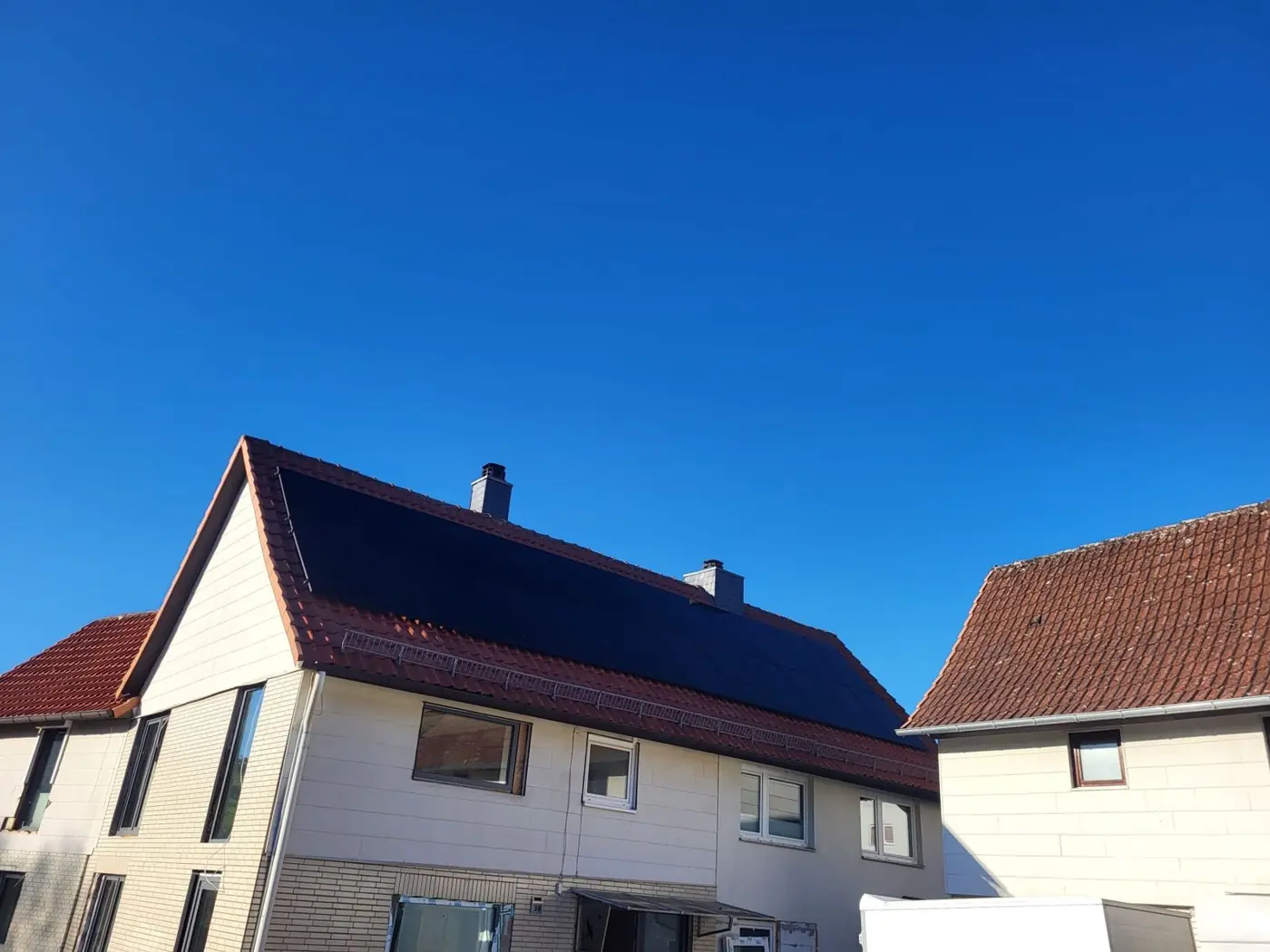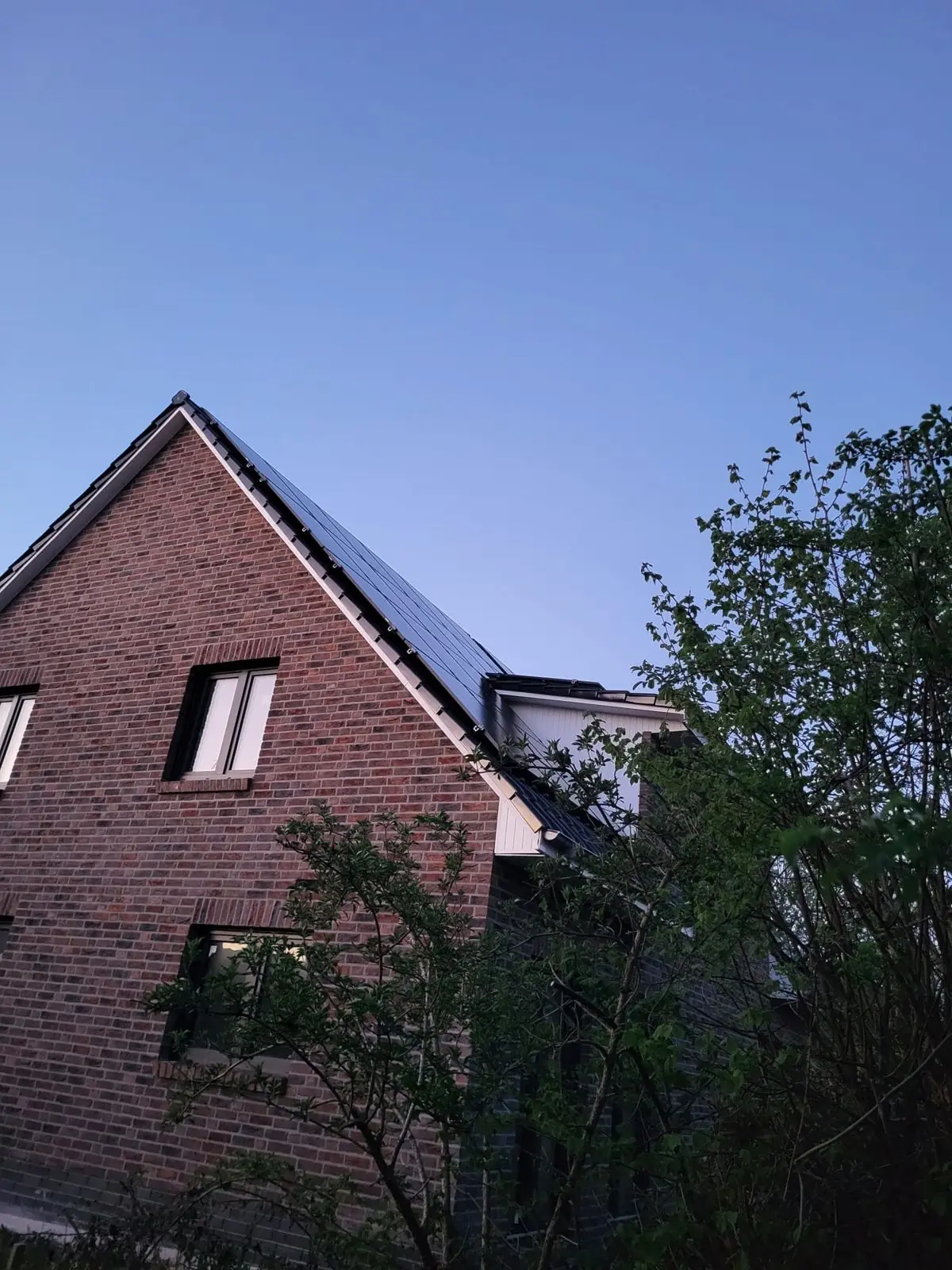
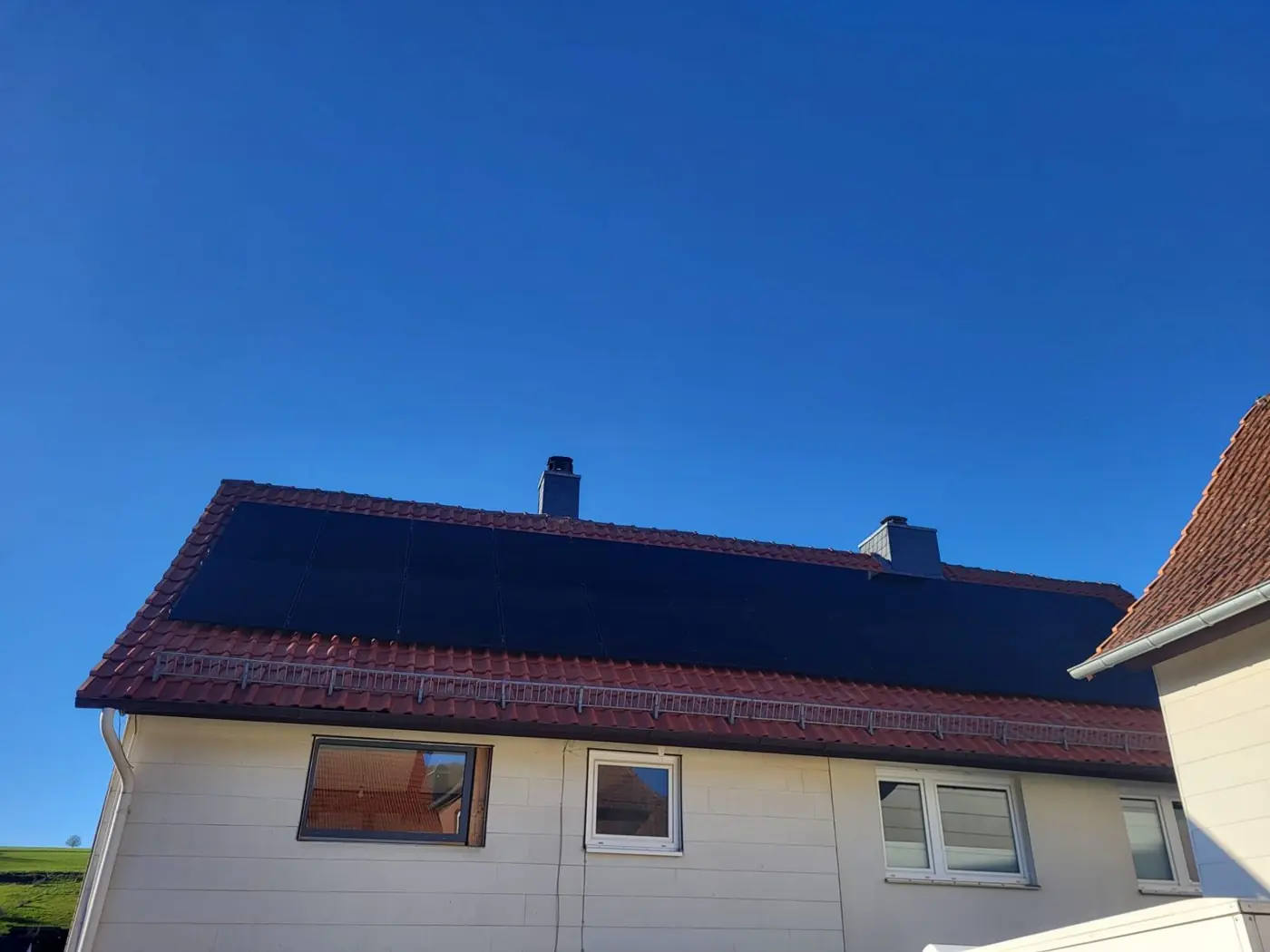
- A typical system for a family home (8–10 kWp) costs about €8,500 to €13,000, with a battery about €12,000 to €15,000.
- For private systems up to 30 kWp you pay 0 % VAT.
- In Southern Lower Saxony each kWp produces around 950 kWh of electricity a year.
- The system has usually paid for itself after 9 to 12 years – and keeps running for many years after that.
“What does a system like this actually cost?” – that is the question we hear most often in Hardegsen, Göttingen and Northeim. The honest answer: it depends on your roof and your consumption. With the guide prices in this article, however, you can already estimate well what to expect.
What a solar system costs – the guide prices
The table shows typical prices for a fully installed system, including installation and registration. Small systems are a little more expensive per kWp because part of the costs (scaffolding, electrics, inverter) always applies.
| System size | Suitable for | Without battery | With battery (~10 kWh) |
|---|---|---|---|
| 5–6 kWp | 1–2 people | 5.500–8.000 € | 9.000–12.500 € |
| 8–10 kWp | 3–4 people | 8.500–13.000 € | 12.000–15.000 € |
| 12–15 kWp | Family with e-car or heat pump | 12.000–19.000 € | 15.500–23.500 € |
We give you the exact price after the free site visit as a fixed price. What is in the quote is what you pay – no extra charges.
What is included in the price
With a turnkey system you get everything from a single source:
- Solar modules and mounting system for your roof
- Inverter, with a battery if you wish
- Scaffolding and installation
- Electrical work and connection in the meter cabinet
- Registration with the grid operator and in the national energy register
What the price depends on
Two houses with the same system size can cost different amounts. The main reasons:
- Roof shape and roof area: a large pitched roof is easier to cover than an angled roof with dormers.
- Condition of the roof: if the roof needs renewing in the next few years, it is worth clarifying this beforehand.
- Meter cabinet: older meter cabinets sometimes need replacing. We check this during the site visit.
- Battery: it increases the price, but also the share of your own electricity significantly.
- Wallbox: a wallbox for your e-car costs from about €1,500 with us.
The roof check shows you an estimate for your house in 2 minutes.
What the system saves – an example calculation
Take a family of four in Northeim using 4,500 kWh of electricity a year. They have a 9 kWp system built. The system produces around 8,550 kWh of electricity a year.
| Without battery | With battery | |
|---|---|---|
| Solar power used yourself | 1.350 kWh | 2.925 kWh |
| Saved electricity costs (35 ct/kWh) | approx. €470 | approx. €1,020 |
| Feed-in tariff (7.7 ct/kWh) | approx. €550 | approx. €430 |
| Benefit per year | approx. €1,020 | approx. €1,450 |
This means the system has paid for itself after about 9 to 12 years. But solar modules last 25 to 30 years and longer – the remaining years are your profit. If electricity prices keep rising, this happens correspondingly faster.
Tip: the more solar power you use yourself, the better the system pays off. An e-car or heat pump uses exactly the power that would otherwise flow into the grid for little money.
Taxes, subsidies and feed-in tariff
- 0 % VAT: since 2023 you pay no VAT on private systems up to 30 kWp – neither on modules nor on batteries or installation.
- No income tax: income from systems up to 30 kWp on single-family homes is exempt from income tax. For questions about your situation, your tax adviser can help.
- KfW loan 270: if you want to finance, you can use KfW’s “Renewable Energies” development loan.
- Feed-in tariff: for power you feed into the grid you currently receive 7.7 ct per kWh – guaranteed for 20 years. According to the federal government’s plans, it is to be scrapped for new systems from 2027. More on this in our article Is solar PV worth it in 2026?
Since 2025 some additional rules apply to new systems, for example no payment in hours with negative electricity prices. We explain what this means for your system in the consultation.
Conclusion
A solar system is an investment of several thousand euros – but one that pays for itself over the years and makes you more independent of rising electricity prices. Whether and how well it pays off for your house, we will tell you honestly and free of charge.
Frequently asked questions about costs
Is a solar system still worth it in 2026?
Yes, especially if you use a large part of the electricity yourself. The feed-in tariff has fallen, but every kilowatt hour you use yourself saves you around 35 ct of grid electricity.
Can I finance the system?
Yes, for example through the KfW 270 loan or a loan from your bank. Many customers pay for the system directly, though, because that way it pays off fastest.
Are there hidden costs?
No. You receive a fixed-price quote. Running costs are low: insurance (often via your home insurance) and occasional maintenance.
As of: November 2026. All prices are guide values including installation. Legal and tax information without guarantee – the laws in force apply (including UStG, EStG, EEG).