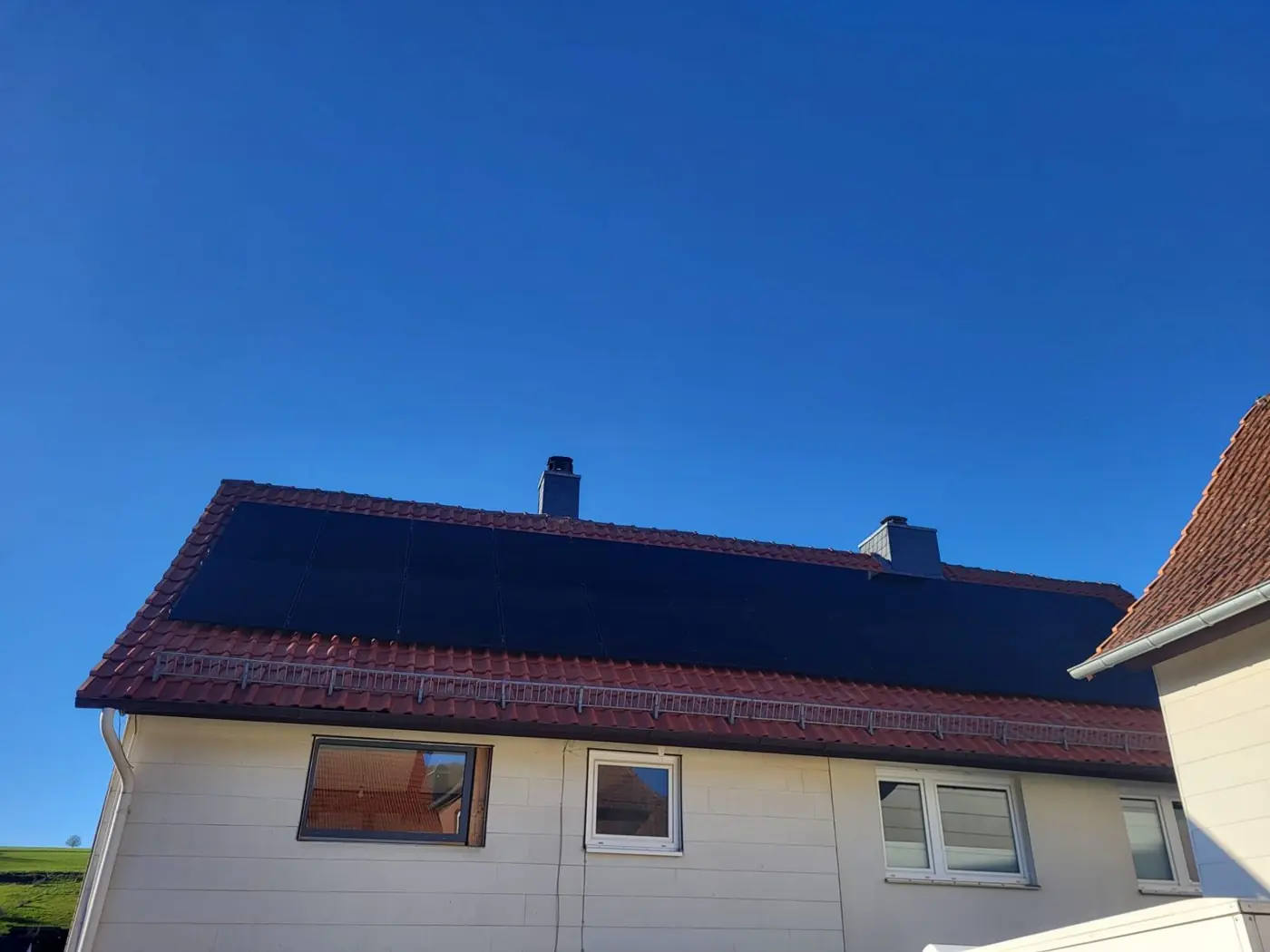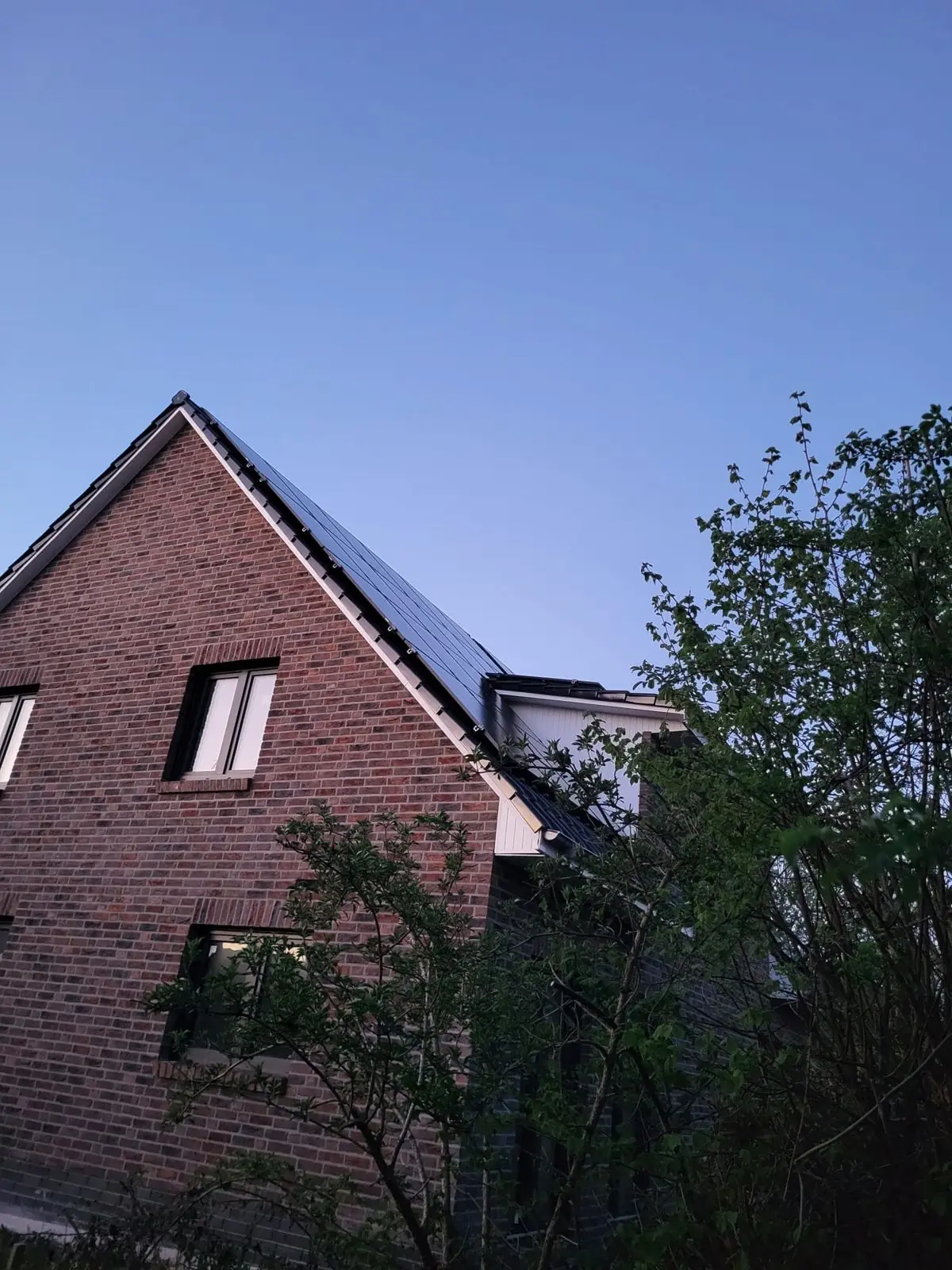
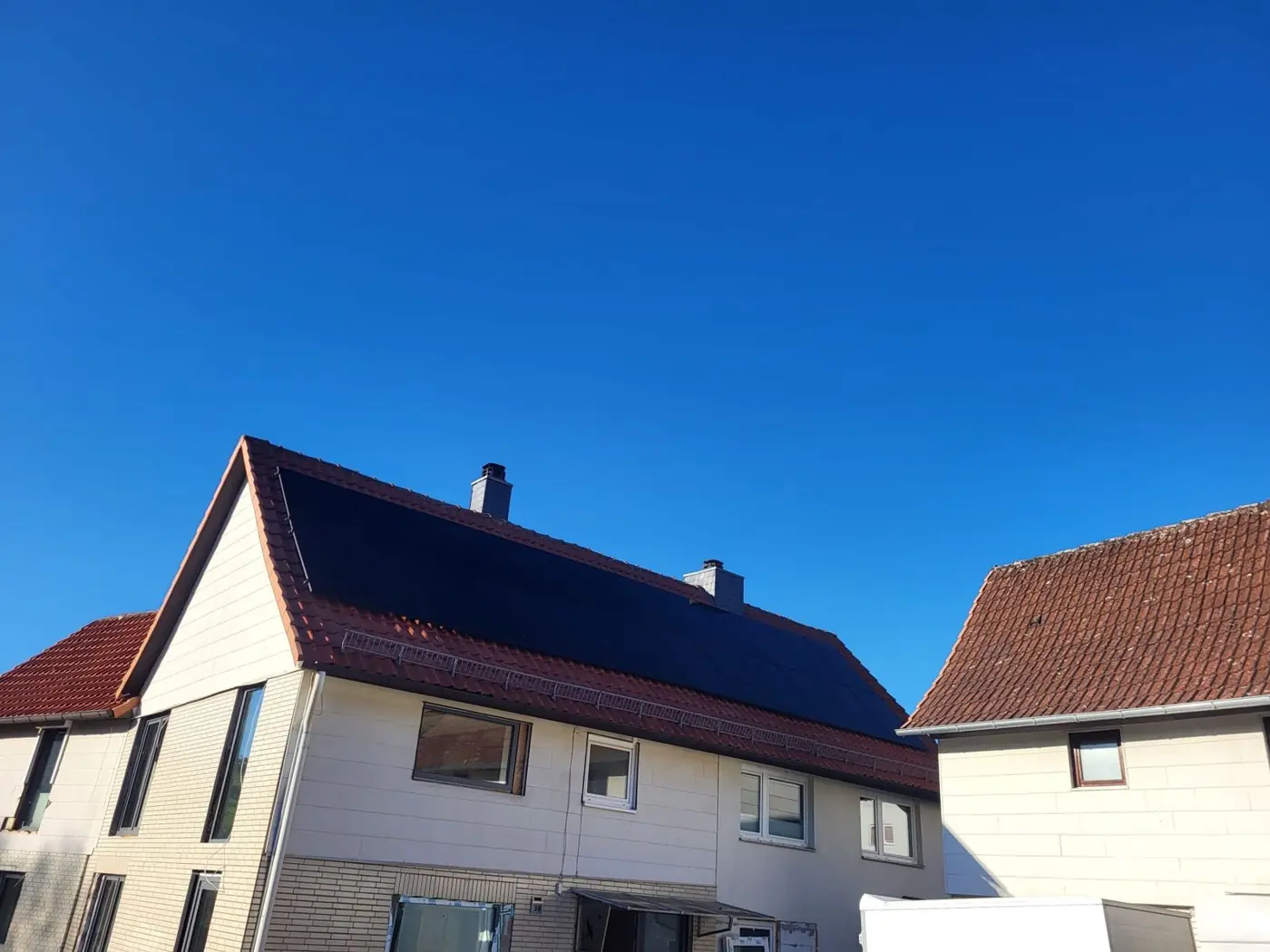
- Yes, a solar system is worth it in 2026 – above all because of the power you use yourself. Every kilowatt hour of your own saves around 35 ct; power fed into the grid earns only 7.7 ct.
- Important: according to the federal government’s plans, the fixed feed-in tariff for new small systems is to be scrapped from 2027. Systems that go into operation by the end of 2026 are supposed to keep it for 20 years.
- With a battery, typical families cover 60 to 70 % of their electricity needs from their own roof; without a battery about 30 %.
“Is it still worth it at all?” – we have been hearing this question almost every day since the news about the feed-in tariff. The short answer: yes. The calculation has simply shifted. In the past you earned money on the power you fed in; today you save on your own consumption. Here we explain what that means for your house.
Why your own power is worth more today than power fed into the grid
Grid electricity currently costs households in Southern Lower Saxony around 35 ct per kilowatt hour. Power from your own solar system costs you about 5 to 10 ct, calculated over its lifetime. So every kilowatt hour you use yourself saves 25 ct or more.
For power you feed into the grid, by contrast, you only get the feed-in tariff: for new systems up to 10 kWp this has been 7.70 ct per kWh since August 2026. That is why the rule today is: a system pays off through self-consumption, not through feeding power into the grid.
| Value per kWh | |
|---|---|
| Solar power used yourself (grid electricity saved) | approx. 35 ct |
| Solar power fed into the grid (tariff up to 10 kWp) | 7,70 ct |
| Cost of your own solar power (over 25 years) | approx. 5–10 ct |
The planned EEG reform: what is set to change in 2027
In July 2026 the federal government adopted a reform of the Renewable Energy Sources Act (EEG). It is now before the Bundestag and is not yet law. The plans are:
- For new systems under 25 kW, there is to be no fixed feed-in tariff from 1 January 2027, only a temporary transitional arrangement.
- Systems that go into operation by 31 December 2026 are supposed to keep their tariff for 20 years, as before.
- Nothing changes for systems that are already running.
If you are thinking about a system anyway, it is worth talking now. We will tell you honestly whether commissioning by the end of the year is still possible for your house – we cannot promise it for every roof.
And if it doesn’t work out? A well-planned system still pays off – it is simply designed even more around self-consumption, for example with a battery.
How much a typical family saves
An example from the region: a family of four uses 4,500 kWh of electricity a year and has a 9 kWp system installed. The system produces around 8,550 kWh a year.
| Without battery | With battery | |
|---|---|---|
| Solar power used yourself | 1.350 kWh | 2.925 kWh |
| Saved electricity costs | approx. €470 | approx. €1,020 |
| Feed-in tariff | approx. €550 | approx. €430 |
| Benefit per year | approx. €1,020 | approx. €1,450 |
Without a feed-in tariff the benefit would be smaller – but with a battery still around €1,000 a year. That is exactly why the battery is becoming more important for new systems.
The roof check shows you the system size, price and savings in 2 minutes.
7 ways to use more of your own solar power
- Run large appliances during the day: use the delay-start timer to set the washing machine, tumble dryer and dishwasher for midday.
- Plan in a battery: it stores midday power for the evening and increases self-consumption the most.
- Charge your e-car with solar power: a wallbox with a solar mode charges preferably when the roof is producing surplus power.
- Integrate the heat pump: it can preheat during the day and heat the hot water when the sun is shining.
- Heat water with surplus power: an immersion heater in the hot water tank uses power that would otherwise go into the grid for little money.
- Make consumption visible: the inverter app shows when your system produces the most. Once you can see that, you automatically shift more of your use to those times.
- Don’t plan the system too small: an east-west roof supplies power in the morning and evening – exactly when many families are at home.
What else a solar system gives you
- Predictable costs: a large part of your electricity costs you nothing for 25 years – no matter how electricity prices develop.
- A house that is ready for the future: if you later get an e-car or a heat pump, you already have the power for it on your roof.
- Less tax and paperwork: 0 % VAT on purchase and no income tax on the earnings for systems up to 30 kWp on single-family homes.
Conclusion
Solar PV is worth it in 2026 – just for a different reason than ten years ago. What matters is how much solar power you use yourself. If you plan now, you may still be able to secure the current feed-in tariff. We will tell you free of charge and honestly whether that works for your house and what size makes sense.
Frequently asked questions
Is a solar system worth it without a feed-in tariff?
Yes, if you use a large part of the power yourself. Every kilowatt hour of your own saves around 35 ct of grid electricity. With a battery, the benefit of a typical family system is around €1,000 a year even without a feed-in tariff.
Should I wait until after the reform to buy?
Probably not. According to the current plans, things will get worse for new systems from 2027, not better. Systems running by the end of 2026 are supposed to keep their feed-in tariff.
Has the reform already been passed?
As of November 2026: no. The federal government has adopted the draft; the Bundestag is still debating it. We will update this article as soon as there is news.
How much of the power can I use myself?
Without a battery usually about 30 % of your consumption, with a battery 60 to 70 %. With an e-car or heat pump it can be even more.
As of: November 2026. All prices are guide values including installation. Legal and tax information without guarantee – the laws in force apply (including UStG, EStG, EEG).